Here's To Public Sociology!
Sociological Images was mentioned in a Baltimore Sun article today! The reporter found us because of our post about the Anna Rexia costume. I also linked to us today in my blog for the Huffington Post. Both the article and the blog post discuss the politics of Halloween costumes, especially the Anna Rexia costume. And, for images, Wendy and Richard offered some great ones here and here on our blog.
Kudos
2007 Tonka Truck Ad: "Built for Boyhood"
The 2007-2008 campaign for Tonka trucks is "built for boyhood." You can see the ad at the Hasbro website. Click on the "watch video" tab. Notice all the messages about boys: they're just "built different," they get dirty, and they cause messes.
Sexuality, Health and Parenting: Gardasil

Notice that Gardasil is now trying to make a connection between its product and being a good parent--you are protecting your daughter by getting them this vaccination. Interesting way to counter the criticisms of the product.
Race and Beauty

Notice that this product line is called African Pride, and yet the model is light-skinned, has straight hair, and more typically "white" facial features.
Masculinity and Class: Ford Trucks

Clearly this ad is making a connection between being "tough" and doing blue-collar work. The implication is that desk jobs are not "tough."
Here's what's really fascinating about this: I found the ad in a magazine called Entrepreneur, a magazine clearly aimed at an upper-middle or upper class audience who do desk jobs. Since I find it unlikely they're trying to actually alienate the readers of the ad, I'm guessing the point is to let these desk workers gain some "toughness" by buying a Ford truck.
Halloween costumes

Newsweek had an article today wondering if girl's Halloween costumes might be too risky. I wasn't surprised (I remember being shocked when I saw young girls dressed up as Spice Girls in 1998) so I decided to look around the Internet to find other questionable costumes. Not surprisingly, Halloween costumes are markers of not only gender and heterosexuality, but of race and class as well.
Let's take children's "occupational" costumes, for example. Here are some for girls: The French maid, nurse, and cheerleader costumes were the most prevalent.


And what about occupations for boys?


 And look at how race is marked with some of the children's costume models (2 cats, and a dancer):

 And note how the intersections of race, militarization, sexuality and gender are also displayed in this costume. The first is a children's costume, and the second is for teenagers. Both costumes are called "Major Flirt."

And now let's move on to teenage costumes. Here are some particularly popular ones for teen girls-- sexy devils and sexy angels.


And some teen girl "occupation" costumes (prisoner, referee, navy):


And of course there are teen bunnies-- "Hunny Bunny Teen" and "Classic Playboy Bunny":


And what do teen boys get to dress up as? Scary clowns, murdering maniacs, and pimps.


The costumes for couples are also pretty telling-- marked by heteronormative stereotypes. The first is a "Pimp and Kristy" costume, the second is a cop costume, and finally a costume of a brick layer and a woman dressed as a home, where the woman is literally displayed as the object, as the object of a man's action.


 Anyway, happy Halloween!
 Voting Rights Section Chief John Tanner
This is John Tanner, the Department of Justice Voting Rights Chief, talking to a Latino citizens group. He argues that minorities won't be hurt by voter ID rules because they die before they get old, unlike white people.
I don't know which is worse--the way he just says this casually, or the fact that it's actually true, due to horrible inequities in income and access to health care in the U.S.
Since We're On The Topic Of Grotesque T-Shirts
dehumanizing women; women as toys, useful only for fucking; women as interchangeable:
 By the way, on the back it says: "Isn't that why women have more than one hole?"
Here it is in a pillowcase:
Different take, same message:

Trivialization of rape:


Glamorization of violent sex and the priviliging of men's sexual pleasure:

Trivialization of relationship violence:

This last one says: "I like my women like my chicken, battered."
Who Would Wear This? A Pedophile?!
A disturbing t-shirt design that 'spoofs' the Fox Network show, "Are you Smarter Than A
Fifth Grader?"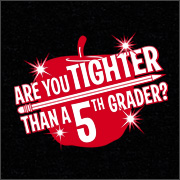
Sold at: http://www.tshirthell.com/
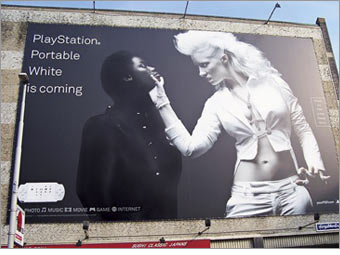
Race, Class, And Gender
This is one of my very favorite images. I use it when I teach about the intersection of race, class, and gender. What I see in this image is a mediation of the stereotype of the threatening black man. In particular, he is mediating the threat that his body poses with both class and femininity. By photographing him on a sailboat, especially comfortably stretched out over the water, the image suggests that he is wealthy and civilized. The sweater and khakis contribute to this. And the pale pink of his sweater invokes femininity and a certain softness.

Some Videos for Class
"Pornography: The Secret History of Civilization" (2005) is useful for showing that non-procreational sex and sexual enjoyment are not "modern," and that using and enjoying sexually explicit images isn't new, either. I liked the first two episodes in the series, especially the second one, which shows how many explicit images there are in religious buildings and texts from the Middle Ages in Europe. Be warned, you need to watch these before showing them to be sure you can get away with it with your audience--for many students, even the artwork and religious drawings would probably lead to outrage today (which can be an interesting discussion in and of itself).
"Fenceline" addresses institutional racism, environmental pollution, and activism by looking at residents in a town in Louisiana and the divisions that arise between blacks and whites about the possibility of toxic waste contamination. It could be useful for discussing environmental issues or looking at why two groups in the same community could come to such different conclusions about what is going on.
Trivializing Women's Power
Power as cleaning products (note the appropriation of Rosie the Riveter):
Power as a flippy skirt and cute glasses (the text: "That flippy skirt backs up your girl power, do your glasses?"):

Power as beauty:

NEW: Claim "Victory" (over being too fat to fit into your skinny jeans) with Special K:

Defining Fat
Click here to see a flickr slide show of dozens of people with their BMI label ("underweight," "normal," "overweight," "obese," and "morbidly obese"). There's something about seeing all these nice looking people with these judgmental labels applied to them that reveals that the BMI is a social construction. Also it's a good illustration of the Foucauldian idea that knowledge (discourse, or even "science") is used to label and control people, especially when it is internalized.
Powerthirst
Click here for a hilarious mock-commercial making fun of both energy drinks and masculinity. If you like that one, try this one.
Anna Rexia Halloween Costume

From the website: "Skeleton Costume includes... 'Anna Rexia' Badge and Ribbon Tie Belt [to measure your waist]."
Safer Sex PSAs
A friend sent me this safer-sex PSA from France.
It's especially interesting if you compare it to this safer-sex PSA from Germany.
Racialization
 Gwen recently pointed out to me the fact that pit bulls have replaced handguns on the covers of rap and hip hop albums. This is an excellent example of racialization: the process by which something comes to have racial meaning in a society.

Of course, this is not just about race, it's about gender too. Here's Missy Elliot appropriating the masculinity attributed to the pit bull:

And you know when Weird Al does it, it's really happening:

Here's an essay, by the way, that I wrote for The Huffington Post (at Gwen's urging and with her help) about the scandal involving Michael Vick's dog fighting:
The Secret Brotherhood Between Dog Fighting and Football
Subscribe to:
Posts (Atom)
